
Professional Environment Artist Course
Become a AAA-Level Environment Artist in Unreal Engine 5
40 hours·$231.18
Unreal Engine
Authorized Training Center
Unity
Education Partner
Pathways to mastering the world of 3D
Become a AAA-Level Environment Artist in Unreal Engine 5
40 hours·$231.18

Three specialisations in one course: modelling, sculpting and environments
20 hours·$108.61

From your first line of C# to an official Unity certification
30 hours·$153.60
Whatever your game idea is — you will build it and ship it from scratch
30 hours·$193.94
From the idea to a complete short film — with Higgsfield
Starts 16 September·10 hours·$77.58
Seats full
Work, conversations and articles the team picked, and what your classmates reacted to this fortnight
Blender's yearly conference, BCON26, runs from 23 to 25 September 2026 at Felix Meritis in Amsterdam, and today is its second day. More than 90 talks,…
Source: Blender Conference
At Meta Connect this week Meta unveiled Meta VR Glasses, a VR device the size of glasses rather than a headset. It weighs about 100 grams, five times lighter…
Source: Unity (Business Wire)
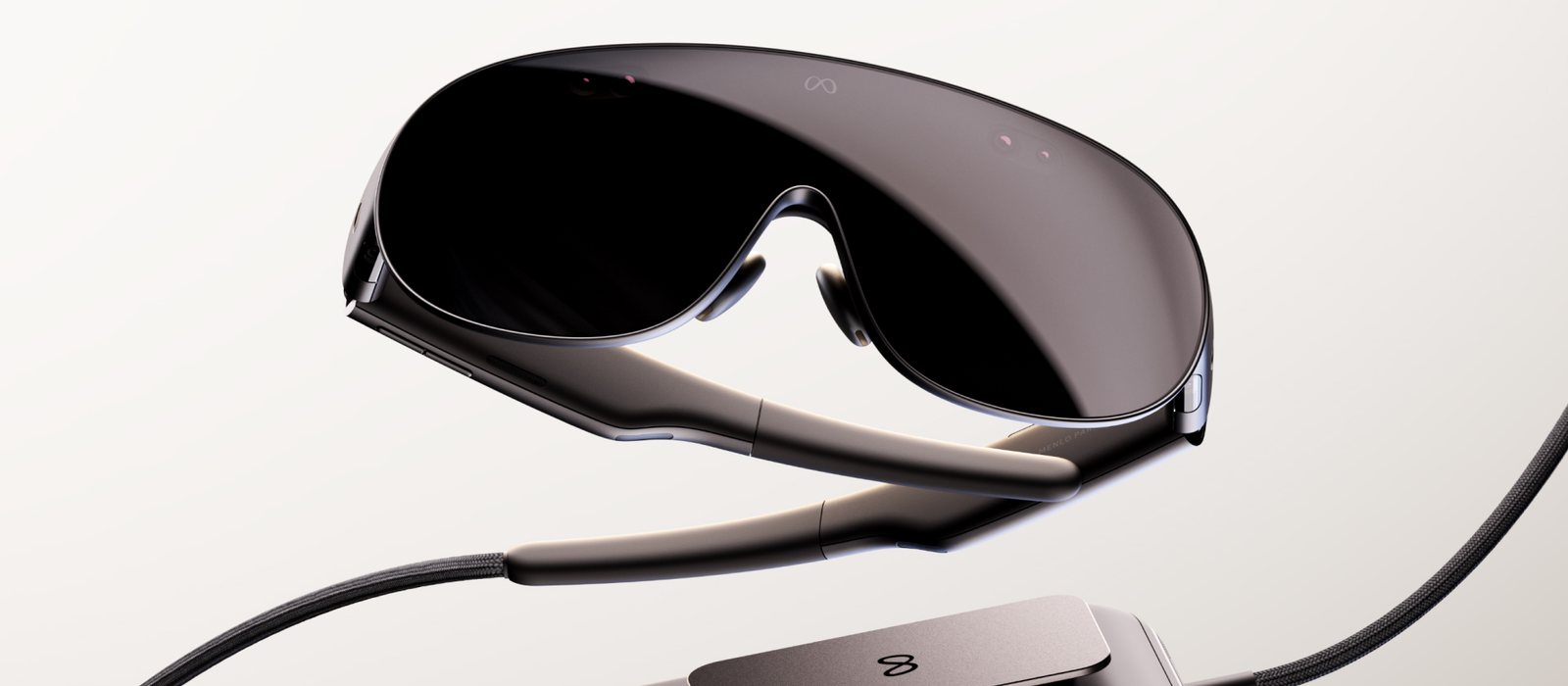
At Meta Connect this week Meta unveiled Meta VR Glasses, a VR device the size of glasses rather than a headset. It weighs about 100 grams, five times…
Source: Unity (Business Wire)
At Meta Connect this week Meta unveiled Meta VR Glasses, a VR device the size of glasses rather than a headset. It weighs about 100 grams, five times lighter than Meta Quest 3 according to Meta, because the battery and processor move into a small separate puck that clips to your belt or pocket and connects to the glasses by a thin cable. The displays are micro-OLED, and you navigate with your eyes and hand gestures, no controllers required. It costs $1,299.99 and arrives in spring 2027.
The bigger news for Unity students came a day later: Unity announced day-one engine support for the device. All you need is Unity 6.6 or newer and the Meta XR All-in-One SDK at v207 from the Unity Asset Store. Unity says existing Quest apps run on the new device and projects built on OpenXR carry forward with the same workflows, with expanded eye and hand tracking support, a GPU-efficient rendering mode without visible quality loss, enhanced spatial audio, and the ability to test interactions in the Editor without owning the device.
Studios are not waiting: games such as Supernatural, Two Point Hospital – Mixed Reality Edition, Phoenix Wright: Ace Attorney Dual Destinies VR and Story of Seasons are being built in Unity to be ready at launch. The company says Unity powers the majority of the top-selling games on Meta's VR platform.
Why does this matter to you? Because the device does not arrive before spring 2027, and the tools are available today. That gives you months to build a small VR project with the Unity skills you are learning now, ready for when people go looking for things to play on a new device. Whoever arrives early on a new platform gets seen more.
Image: Meta.
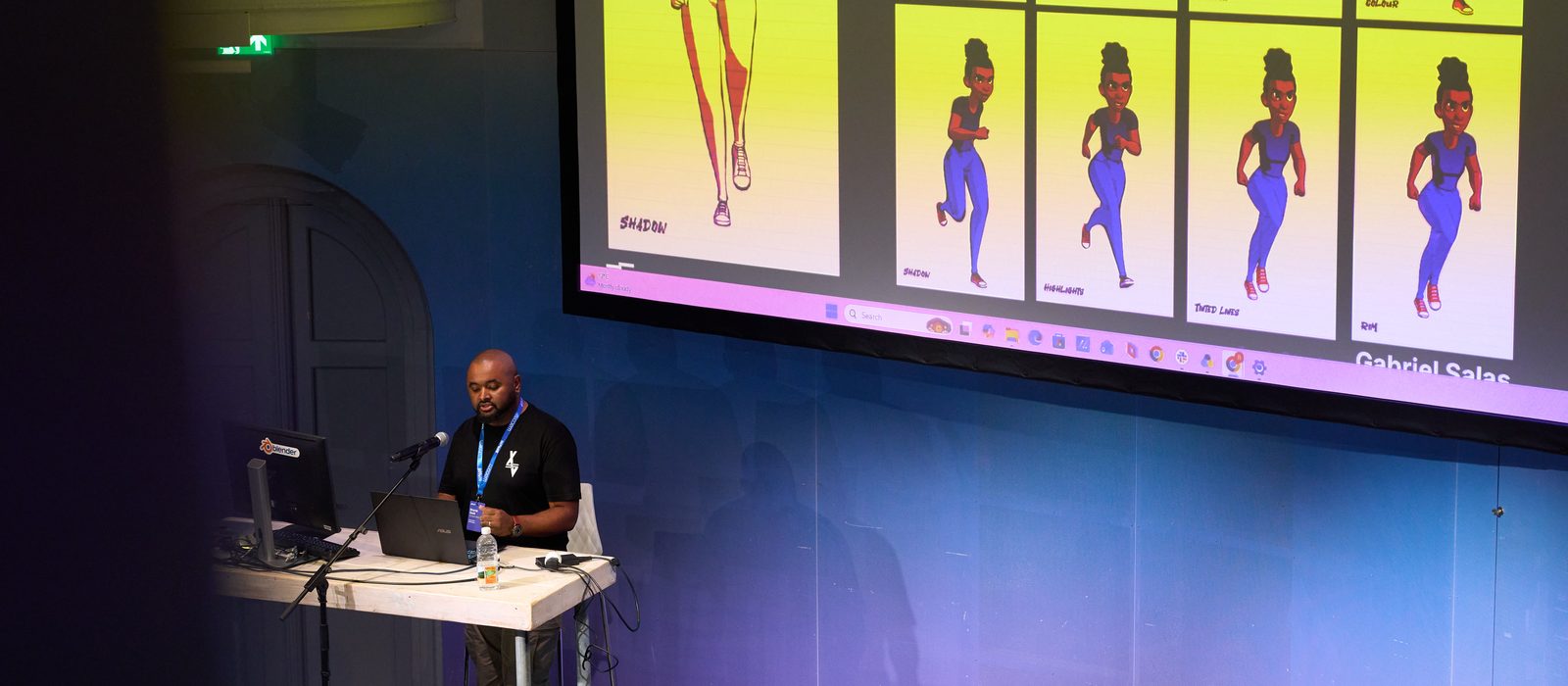
Blender's yearly conference, BCON26, runs from 23 to 25 September 2026 at Felix Meritis in Amsterdam, and today is its second day. More than 90…
Source: Blender Conference
Blender's yearly conference, BCON26, runs from 23 to 25 September 2026 at Felix Meritis in Amsterdam, and today is its second day. More than 90 talks, workshops and live tutorials across four parallel tracks, given by artists, developers and studios who use Blender on real work. Tickets sold out, but you do not need one: the talks are recorded and uploaded as the conference goes to Blender's official YouTube channel, youtube.com/@BlenderOfficial, and some have been up since the first day, including the keynote.
If you are on the Blender or environment art path, start with «The Nature Generator» by Andreas Dürr, on building production-ready Geometry Nodes tools that generate nature, then «The Spinal Spline» by Gilad Harnik, a Geometry Nodes framework for built environments, and «Controlling Physics With Geometry Nodes» by Simon Thommes. For modelling, the live tutorial «The Power of Curves» by Iwo Pilc.
For Unity and Unreal students: «Connecting Blender and Unreal Engine: A Full Character Creation Workflow» by Stéphane Biava, which takes a complete character from Blender into Unreal, «Mathemagics: Building Assets for Realtime Effects» by John Einselen, and «The Art of Real-Time Viewport Cheats» by Bao-Thinh Dinh, which is already up.
If you dream of a film or a small studio: «Production Lessons of Singularity», in which the Blender Studio team shares what making their painterly short taught them, «Blendrooms» by Calvin Romeyn on the VFX of A24's Backrooms, from YouTube to Hollywood as its title puts it, «From Final_FINAL_v3 to Making an African Short Film» by Taiwo Folu, and «Fall of Reach» by Julien Blarel on epic sci-fi for small studios. And for every digital artist: «Not Color» by Nathan Vegdahl, on colour science.
Our suggestion: do not try to watch everything. Pick two talks from your path this week, watch them with Blender open, and try one idea from them on your own project. That is how a conference turns from something you hear about into something you learn from.
Photo: a talk on the BCON26 stage, by Thomas Dinges, from the conference's official photo album, CC-BY.
With the new player you can see exactly what counts and what does not.
With the new player you can see exactly what counts and what does not.
The rule itself has not changed since day one: the seconds you actually play at 1.5x or slower count. Playing faster than 1.5x, skipping to the end of a lesson, or leaving it running in a background tab adds nothing to your progress.
What is new is that the player says so while it is happening, instead of you finding out too late. If you have been watching at 2x, those hours did not count — and that should have been visible from the start. The lessons that need rewatching now show on the progress track in the new player.
Our certification track is built on Unity's three certified programmer credentials: Unity Certified User, then Associate, then Professional. The…
Our certification track is built on Unity's three certified programmer credentials: Unity Certified User, then Associate, then Professional. The advanced pathway is designed against the exam objectives themselves rather than a parallel syllabus — programming, UI, debugging, asset management from prefabs through version control, and then the certified-professional outcomes, from optimisation to working inside a software team.
Two rules we hold to, and say up front: no certificate for partial completion, for any reason whatsoever, and no guarantee of a job. A certificate documents a level you reached; it is not a promise we made.
Which is why we suggest reading the exam objectives before enrolling rather than after. The exam does not ask whether you watched the lessons. It assumes you have built with your hands: moved between scenes, shipped a WebGL build, fixed a null variable at runtime, and understood the difference between inheritance and an interface before choosing between them.
Majestic Mind Games, based in Jeddah, announced a $1.45 million round co-led by Merak Capital and Impact46, with backing from NEOM. The studio was…
Source: Wamda
Majestic Mind Games, based in Jeddah, announced a $1.45 million round co-led by Merak Capital and Impact46, with backing from NEOM. The studio was founded in 2023 by Lujain Albukhari and Majed Anbar, and builds original titles aimed at PC first, with selected games expanding to console and mobile later.
The detail that matters to a student in Amman is not the amount but the team size: a small named core — a lead artist and a programmer — and a bet on original IP rather than outsourcing services.
This is the pattern repeating across the region right now: small studios, early funding, looking for people who can carry several jobs at a reasonable standard. Which is precisely the opening that suits someone who has finished a whole project with their own hands, because a team of four does not hire for a single skill.
When you scale an object with S you are not changing the mesh. You are writing a number on the object that says "draw this at twice the size".…
When you scale an object with S you are not changing the mesh. You are writing a number on the object that says "draw this at twice the size". Blender respects that number; an engine sometimes does not. The familiar result is a model that looks correct in Blender and arrives in Unity or Unreal at double size, or with a physics collider that does not match what the eye sees.
The damage starts before export, too. Bevel measures its width in object units, so a non-uniform scale like (1, 1, 0.4) gives you a thick edge on one axis and a thin one on another. Solidify and cloth simulation behave the same way.
The habit: before exporting, and before any modifier that depends on distance, select the object and press Object ▸ Apply ▸ Scale, or Ctrl+A ▸ Scale. Then check the item panel with N — scale should read 1.0 on all three axes.
Meccha Chameleon, a $5.99 multiplayer hide-and-seek game, was released on Steam by two Japanese developers on 10 June 2026 and passed 20 million…
Source: Inven Global
Meccha Chameleon, a $5.99 multiplayer hide-and-seek game, was released on Steam by two Japanese developers on 10 June 2026 and passed 20 million units sold on 12 August — roughly two months later.
The details worth more attention than the number: the team is two people, one programmer and one director-artist. The game is built in Unreal Engine and uses Epic Online Services for matchmaking rather than dedicated servers. Development took about two months, because the pair had shipped six Steam games since late 2024 and reused the multiplayer framework they built along the way.
That is the real shape of an overnight success: not a brilliant idea that appeared from nowhere, but a sixth project by a team that kept shipping and kept learning. The lesson is a practical one — finish the small game and release it, because the scaffolding you build today is what makes the next project possible in two months.
Basil is one of our students. His project "Against ME" is a local multiplayer game in Unity 6 on URP, taking its cue from Indigo Prophecy. He is now…
Basil is one of our students. His project "Against ME" is a local multiplayer game in Unity 6 on URP, taking its cue from Indigo Prophecy. He is now the main Technical Artist at Tamatem, and is preparing for the Certified Professional Artist exam.
We promise nobody a job, and our terms say so in as many words: we issue a certificate representing the level a student reached, and we do not guarantee employment. What we can say is that the route Basil took is not a secret. One project, finished all the way to the end, on a named render pipeline, with decisions its author can defend in an interview.
That is the difference between a portfolio that gets read and one that gets scrolled past. Not the number of projects, but having a single one whose author knows why every decision in it was made.
A reference in Unreal has three states, not two: null, valid, and destroyed-but-still-held. Comparing != None only separates the first from the other…
A reference in Unreal has three states, not two: null, valid, and destroyed-but-still-held. Comparing != None only separates the first from the other two, so the wrong branch runs for an enemy that had Destroy Actor called on it a moment ago, and the crash arrives inside the next function rather than where the mistake is.
The IsValid node checks both conditions at once, and it is a single node with two execution outputs, which replaces the hand-rolled branch entirely. In C++ it is the same call: if (IsValid(Target)), not if (Target != nullptr).
The habit worth fixing: any reference you store in a variable across frames — the current target, the last checkpoint, the vehicle you were driving — gets an IsValid check at every use, not at assignment. The moment you stored the reference says nothing about the moment you read it.
Blender 5.2 arrived on 14 July 2026 as a Long-Term Support release. The most significant addition is an experimental physics framework inside…
Source: CG Channel
Blender 5.2 arrived on 14 July 2026 as a Long-Term Support release. The most significant addition is an experimental physics framework inside Geometry Nodes, through an XPBD Solver node, which lets hair and cloth be simulated in the node tree rather than in a separate system.
Among the practical additions: a Mesh Bevel node, a Thin Wall mode on the Principled BSDF for thin surfaces such as paper, leaves and soap bubbles, and the LoopTools operations folded into core modeling instead of an add-on.
The feature you will feel first is the Cycles texture cache. Converting textures to .tx files cut memory use in some demo scenes by as much as 80%, at a slight cost in render time. If your machine chokes on a large scene, that is the setting to try before buying a bigger card.
A monthly analysis of game art job listings counted 1,605 roles posted in June 2026 by 817 studios across more than 40 countries. The numbers are…
Source: Artblast
A monthly analysis of game art job listings counted 1,605 roles posted in June 2026 by 817 studios across more than 40 countries. The numbers are worth reading slowly: 34% of listings were senior or lead, and only 11% were entry-level or junior.
By geography, North America came first at 41%, then Europe at 31%, Asia-Pacific at 13%, and the Middle East and Turkey at 8%. Also, 77% of the roles were on-site rather than remote.
Two things we take from it for our students. First, the entry-level door genuinely is narrow, and a portfolio showing finished work in a named production pipeline is what gets you read inside that 11%. Second, the region's share has room to grow, and the job nearest you is usually at a small studio that advertises rarely — you hear about it through events and through people, not through job boards.
"Hakaya Emma – Bittersweet" was built by a team of our students — Basil, Khaled Omari and Yaman Abu Laban — in Unreal Engine 5, with a stated…
"Hakaya Emma – Bittersweet" was built by a team of our students — Basil, Khaled Omari and Yaman Abu Laban — in Unreal Engine 5, with a stated purpose: to show a player Jordan. Petra, Aqaba and Mount Nebo.
A project that commits to a real place imposes a discipline that an invented one does not. You cannot make up the sense of scale in the Siq at Petra, and you cannot light Aqaba in the afternoon with a light that is nothing like it. You have to look at reference, and then look again.
That is exactly the skill studios ask for: matching a visual reference under performance constraints, rather than building whatever comes to mind. It is why we push students towards a location they actually know — the street they live on, if it comes to that — instead of a science-fiction city that nobody can say is wrong.