
Professional Environment Artist Course
Become a AAA-Level Environment Artist in Unreal Engine 5
40 hours·$231.18
Unreal Engine
Authorized Training Center
Unity
Education Partner
Pathways to mastering the world of 3D
Become a AAA-Level Environment Artist in Unreal Engine 5
40 hours·$231.18

Three specialisations in one course: modelling, sculpting and environments
20 hours·$108.61

From your first line of C# to an official Unity certification
30 hours·$153.60
Whatever your game idea is — you will build it and ship it from scratch
30 hours·$193.94
From the idea to a complete short film — with Higgsfield
Starts 16 September·10 hours·$77.58
Seats full
Work, conversations and articles the team picked, and what your classmates reacted to this fortnight
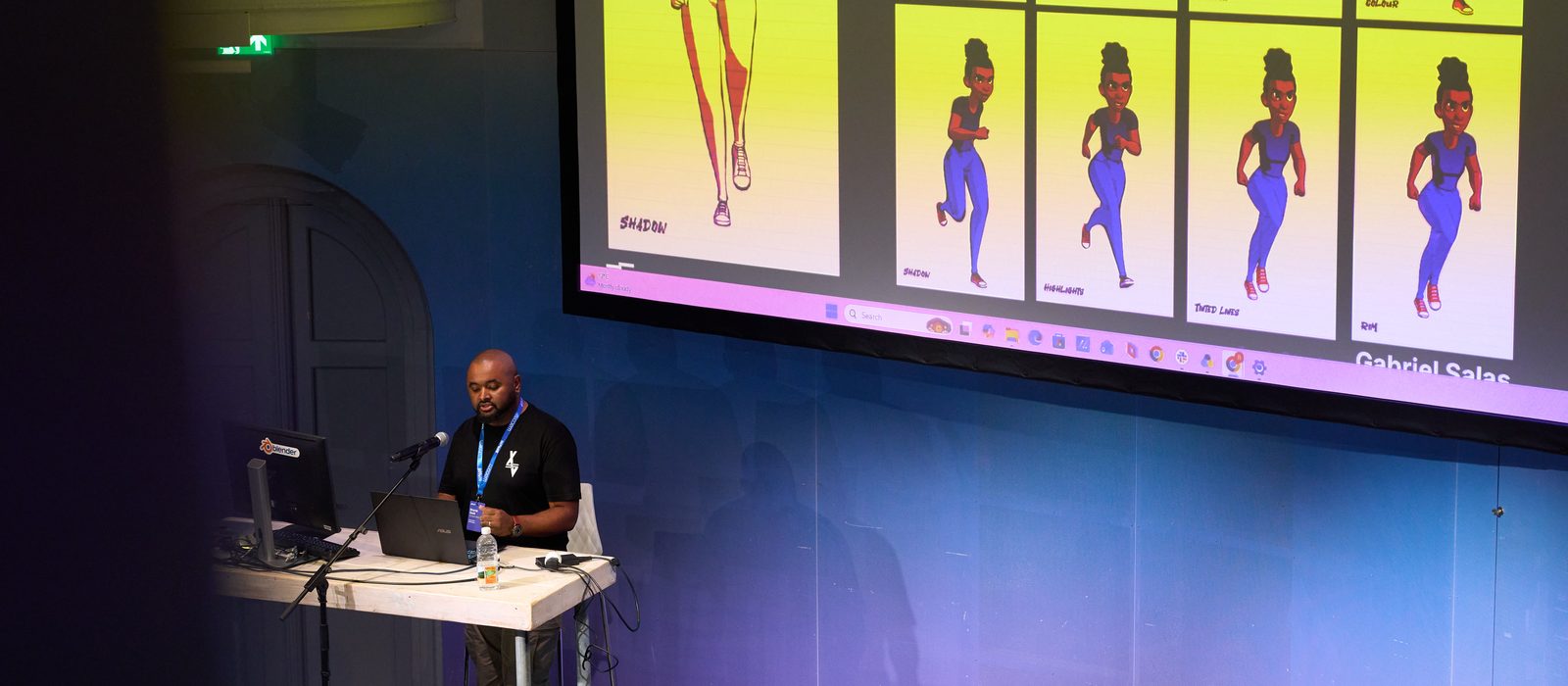
Blender's yearly conference, BCON26, runs from 23 to 25 September 2026 at Felix Meritis in Amsterdam, and today is its second day. More than 90 talks,…
Source: Blender Conference
At Meta Connect this week Meta unveiled Meta VR Glasses, a VR device the size of glasses rather than a headset. It weighs about 100 grams, five times lighter…
Source: Unity (Business Wire)
Our certification track is built on Unity's three certified programmer credentials: Unity Certified User, then Associate, then Professional. The…
Our certification track is built on Unity's three certified programmer credentials: Unity Certified User, then Associate, then Professional. The advanced pathway is designed against the exam objectives themselves rather than a parallel syllabus — programming, UI, debugging, asset management from prefabs through version control, and then the certified-professional outcomes, from optimisation to working inside a software team.
Two rules we hold to, and say up front: no certificate for partial completion, for any reason whatsoever, and no guarantee of a job. A certificate documents a level you reached; it is not a promise we made.
Which is why we suggest reading the exam objectives before enrolling rather than after. The exam does not ask whether you watched the lessons. It assumes you have built with your hands: moved between scenes, shipped a WebGL build, fixed a null variable at runtime, and understood the difference between inheritance and an interface before choosing between them.
Basil is one of our students. His project "Against ME" is a local multiplayer game in Unity 6 on URP, taking its cue from Indigo Prophecy. He is now…
Basil is one of our students. His project "Against ME" is a local multiplayer game in Unity 6 on URP, taking its cue from Indigo Prophecy. He is now the main Technical Artist at Tamatem, and is preparing for the Certified Professional Artist exam.
We promise nobody a job, and our terms say so in as many words: we issue a certificate representing the level a student reached, and we do not guarantee employment. What we can say is that the route Basil took is not a secret. One project, finished all the way to the end, on a named render pipeline, with decisions its author can defend in an interview.
That is the difference between a portfolio that gets read and one that gets scrolled past. Not the number of projects, but having a single one whose author knows why every decision in it was made.
"Hakaya Emma – Bittersweet" was built by a team of our students — Basil, Khaled Omari and Yaman Abu Laban — in Unreal Engine 5, with a stated…
"Hakaya Emma – Bittersweet" was built by a team of our students — Basil, Khaled Omari and Yaman Abu Laban — in Unreal Engine 5, with a stated purpose: to show a player Jordan. Petra, Aqaba and Mount Nebo.
A project that commits to a real place imposes a discipline that an invented one does not. You cannot make up the sense of scale in the Siq at Petra, and you cannot light Aqaba in the afternoon with a light that is nothing like it. You have to look at reference, and then look again.
That is exactly the skill studios ask for: matching a visual reference under performance constraints, rather than building whatever comes to mind. It is why we push students towards a location they actually know — the street they live on, if it comes to that — instead of a science-fiction city that nobody can say is wrong.
When SitaraX hosted miniUnite in Amman, it was not an introductory evening. It was Unity's first ever official event in Jordan, and more than 200…
When SitaraX hosted miniUnite in Amman, it was not an introductory evening. It was Unity's first ever official event in Jordan, and more than 200 people came: developers, professionals, founders, academics and students.
What gives that number meaning is not its size but who was in the room. Teams from Unity Technologies, from Tamatem, Maysalward and Madhook, alongside Princess Sumaya University for Technology and Al-Hussein Technical University. Jordan's games industry and the universities whose graduates it hires sat in one place for an evening.
That is why we run these gatherings and why we push our students towards them. Skill is built in front of a screen, but a first opportunity usually arrives from a room containing the people who do the hiring. And having that room be in Amman, rather than in a city that requires a visa, is a considerable difference.
In the advanced weeks, our assessment team does not see trainees' names. Anyone who puts their name inside the project — in the code, or in file…
In the advanced weeks, our assessment team does not see trainees' names. Anyone who puts their name inside the project — in the code, or in file names — gets an immediate notice to take it out.
The reason is simple. In a small school where everyone knows everyone, the easiest marking error is reading the person instead of the work. And a student who knows their name is not visible stops writing notes explaining what did not work, and starts fixing it.
Any trainee may also contest a mark. A neutral committee from the academic coordination team then re-examines the project and the grade. Our position is that the least a finished project deserves is an analysis saying where it stands and what would make it professional; a grade on its own is the minimum any platform hands out.